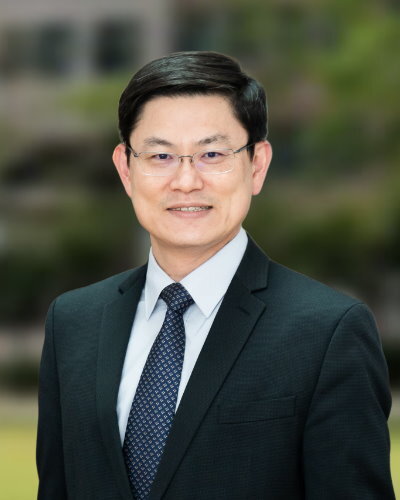
A Fellow of ASME, Professor Chang received his Ph.D. in Mechanical Engineering from Carnegie Mellon University, USA in 2001. With a mix of IBM/Hitachi advanced magnetic disk drive R&D in Silicon Valley, California and academic careers in USA, New Zealand and Taiwan, his research in mechatronics, robotics, mechanical vibrations, dynamic systems and control, smart machinery and manufacturing have archived in more than 200 journal/conference papers and more than 30 invention patents.
From Human Biomechanics to Embodied Intelligence: Advancing Human–Robot Interaction through Biomechanics-Informed Robotics
As robots increasingly transition from structured industrial environments to human-centered applications, understanding and incorporating human biomechanics into robotic intelligence has become essential for achieving safe, adaptive, and intuitive human–robot interaction. Beyond conventional approaches based primarily on kinematic control and visual perception, biomechanics-informed robotics provides a fundamental framework for understanding human motion, physical capabilities, neuromuscular behavior, and mechanical interaction, enabling robotic systems to respond more naturally and effectively to human intentions and physical conditions. This keynote explores the integration of human biomechanics, precision mechatronics, intelligent sensing, and adaptive control to advance physical human–robot interaction toward embodied intelligence. Particular emphasis will be placed on translating biomechanical characteristics, including joint kinematics, mechanical impedance, stiffness, and human motor behavior, into robotic design principles and interaction control strategies. Drawing upon research in hand and finger rehabilitation robotics, wearable robotic systems, and human-centered assistive technologies, the presentation will illustrate how biomechanical modeling and real-time physical interaction sensing can support personalized assistance, intention-aware control, and adaptive human–robot cooperation. The talk will further discuss the transition from biomechanics-informed control toward Physical AI and embodied intelligence, where robots integrate physical sensing, biomechanical constraints, and learning-based adaptation to achieve more robust and context-aware interaction with humans. Opportunities and challenges in bridging human biomechanical understanding with intelligent robotic systems will be highlighted, particularly in rehabilitation, assistive robotics, and collaborative robotic applications. Ultimately, this keynote aims to demonstrate that human biomechanics is not merely a constraint on robotic motion but a fundamental source of physical intelligence, providing an essential foundation for the next generation of human-centered robotic systems.